Diana Cates is a technical program leader and systems strategist who served as Chief Ambassador for The Seasteading Institute to promote ocean based societies as a model for governance and development. As a guest blogger, she argues that the alignment between the Eight Great Moral Imperatives and the U.N. Sustainable Development Goals proves seasteading is a practical pathway to address complex environmental, economic, and social challenges.
Guest post by Diana Cates:
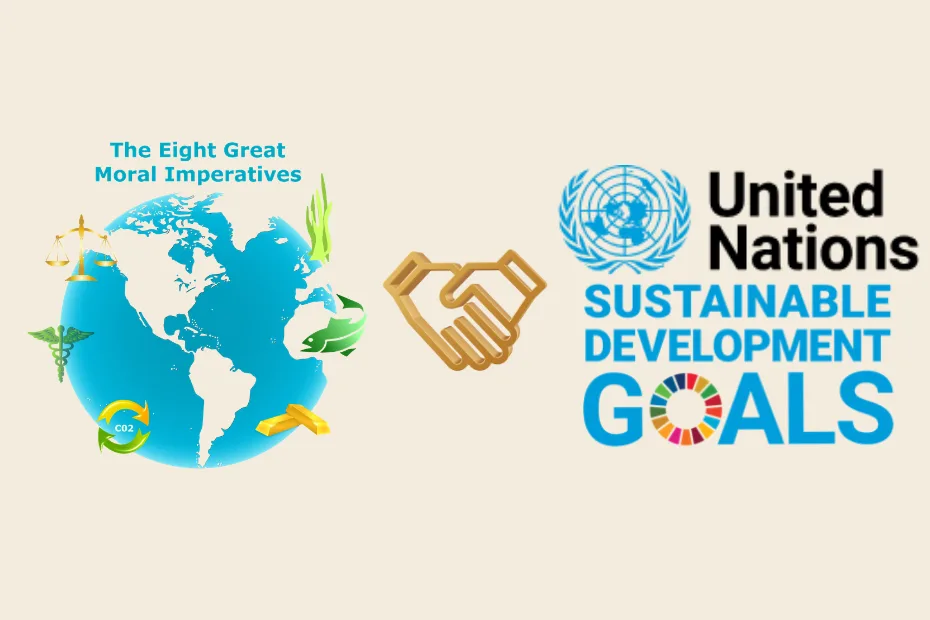
More than a decade ago, The Seasteading Institute shared a visionary glimpse into a future where people could freely connect, collaborate, and experiment to solve humanity’s greatest challenges. In 2026, its Eight Great Moral Imperatives are more relevant than ever, offering an ocean-first framework for advancing the United Nations’ 17 Sustainable Development Goals (SDGs). While the SDGs outline a global vision for peace and prosperity by 2030 across poverty, hunger, health, energy, climate, and strong institutions, seasteading provides a practical pathway for turning those goals into action.
This vision is no longer theoretical. In just the past year, fielded prototypes such as ArkPad-C have successfully weathered multiple typhoons, demonstrating real-world resilience. Newer visitor-ready milestones include ArkPad’s Reef Resort in the Philippines and Ocean Builders’ Alpha Deep in Panama. Together with the many examples highlighted in the Eight Great Moral Imperatives, seasteading reveals practical pathways for transforming the SDGs from aspiration into action. The table below maps each seasteading moral imperative to the U.N. global goals it supports.
| The 8 Great Moral Imperatives | U.N. Sustainable Development Goals (SDGs) | The Connection (Engineering + Systemic) |
|---|---|---|
| 1. Enrich the Poor | SDG 1: No Poverty SDG 8: Decent Work & Economic Growth SDG 10: Reduced Inequalities SDG 11: Sustainable Cities and Communities | The Economic Engine: Opening the “Blue Frontier” creates entirely new industries (aquaculture, OTEC, maritime logistics) rather than just redistributing existing wealth. It allows labor mobility, letting people move to opportunity and pressuring nations to reduce inequality to retain citizens. |
| 2. Cure the Sick | SDG 3: Good Health and Well-being SDG 6: Clean Water and Sanitation SDG 9: Industry, Innovation & Infrastructure | The Innovation Hub: Seasteads can host “medical special zones” to accelerate clinical trials and treatments stalled by land-based bureaucracy. Additionally, OTEC power plants produce massive amounts of fresh, potable water as a byproduct, directly solving sanitation issues. |
| 3. Feed the Hungry | SDG 2: Zero Hunger SDG 12: Responsible Consumption & Production SDG 14: Life Below Water | The Blue Breadbasket: We cannot feed 10 billion people on land without destroying the rainforests. Sustainable open-ocean aquaculture (like roaming cages) provides high-protein food with a fraction of the carbon footprint of beef, relieving pressure on global food systems. |
| 4. Clean the Atmosphere | SDG 13: Climate Action | The Carbon Sink: Seasteading technologies like large-scale algae farming don’t just reduce emissions, they actively sequester gigatons of carbon. OTEC technology replaces baseload fossil fuels with continuous, clean thermal energy from the sea. |
| 5. Restore the Oceans | SDG 14: Life Below Water SDG 15: Life on Land | The Steward: Cities on land externalize pollution downstream. Seasteads must float in pristine water to survive economically (tourism, aquaculture), creating a financial incentive to clean the immediate environment. Moving development offshore also reduces urban sprawl on arable land. |
| 6. Live in Balance with Nature | SDG 11: Sustainable Cities and Communities SDG 12: Responsible Consumption and Production SDG 14: Life Below Water SDG 15: Life on Land | The Closed Loop: On a floating platform, there is no landfill. This constraint forces the invention of truly circular economies where all waste is processed or reused. These “zero-waste” systems can then be exported back to land-based cities. |
| 7. Power the World | SDG 7: Affordable and Clean Energy SDG 9: Industry, Innovation, and Infrastructure SDG 11: Sustainable Cities and Communities SDG 13: Climate Action | The Power Plant: The ocean collects solar energy 24/7. Seasteads serve as the R&D platforms for scaling OTEC, offshore wind, and wave energy, creating the resilient infrastructure needed to power not just the platforms, but coastal megacities. |
| 8. Live in Peace | SDG 4: Quality Education SDG 16: Peace, Justice, and Strong Institutions SDG 17: Partnerships for the Goals | The Governance Upgrade: War is often a conflict over trapped geography. When cities are mobile, citizens can detach from conflict peacefully. This “market for governance” allows for new institutional experiments, from education systems to dispute resolution, that evolve faster than static nations. |
Related:
ArkPad-C (Philippines): The Institute reports the ArkPad-C prototype survived two hurricanes after launch, positioning it as evidence of practical engineering progress and storm-resilience learning-by-doing. (The Seasteading Institute)
Reef Resort / “Come experience seasteading”: Recent Institute news describes visitor-ready, solar-powered floating glamp houses tied to ArkPad’s effort—useful as a “near-term adoption wedge” (tourism + aquaculture + prototyping). (The Seasteading Institute)
Ocean Builders (Panama): The Institute highlights Ocean Builders’ Alpha Deep and its stability demo (including helicopter landing) and underwater room—useful for discussing safety, access, and iterative prototyping. (The Seasteading Institute)